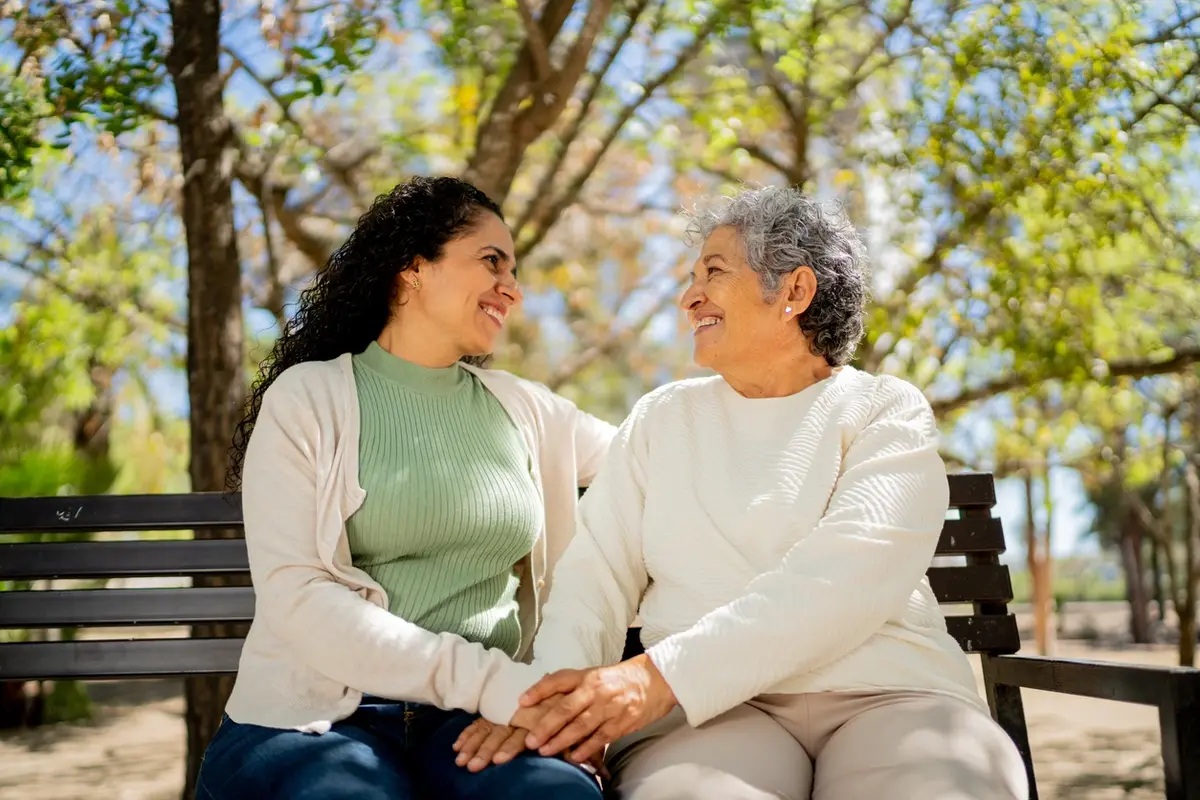

Assisted living in Olympia, WA, provides older adults with assistance with daily tasks such as bathing, dressing, and medication management while preserving as much independence as possible. Communities in the South Sound area offer private apartments, three daily meals, activities, and 24-hour staffing.
Most families in Olympia do not start researching assisted living until something has already happened. A fall, a hospitalization, a phone call from a neighbor about a missed appointment. The search begins under pressure, with limited information and no clear framework for evaluating what they find.
This guide changes that. It covers what assisted living in Olympia, WA, actually includes, who it is right for, what senior living in Olympia looks like on a real Tuesday, how to evaluate and choose a community, and what it costs in Thurston County. Read it before your first tour, and it will make every conversation you have afterward more useful.
What Is Assisted Living and What Does It Include?
Assisted living is a residential care setting for older adults who need regular help with daily tasks but do not require the level of medical care provided in a nursing home. In Olympia, WA, assisted living communities are licensed as Residential Care Communities by the Washington State Department of Social and Health Services.
The services covered typically include personal care support for bathing, dressing, and grooming; medication administration and management; three daily meals in a shared dining room; housekeeping and laundry; social activities and programming; and 24-hour staffing available for support and emergencies.
What assisted living does not include is intensive medical care. Wound management, IV medications, physical therapy on a clinical schedule, and around-the-clock nursing oversight are the territory of nursing homes, not residential assisted living. Understanding that distinction upfront saves families from mismatching the level of care to the person who needs it.
In Washington state, assisted living communities are licensed separately from nursing homes and are held to their own set of DSHS staffing, environment, and care-planning standards. Families can request inspection reports through the DSHS online provider directory before committing to any community.
For a detailed breakdown of what assisted living includes and who it serves most, our article on what is assisted living and who can benefit covers the full picture.
Who Is Assisted Living Right For?
Assisted living is right for older adults who need consistent help with daily activities but can still communicate their needs, make decisions about their own daily life, and live safely with staff support rather than constant clinical monitoring.
Families evaluating senior living in Olympia often ask how to know whether their loved one is at the right stage. The clearest answer is this: assisted living is appropriate when the primary challenge is daily support, not medical complexity. Physical limitations, medication management, nutrition, and personal care are the core things assisted living handles well.
It is not the right fit when the primary challenge is cognitive safety. A person living with Alzheimer’s or another form of dementia who wanders, gets disoriented, or can no longer safely navigate a residential environment needs memory care, not standard assisted living. Nor is it the right fit for someone who needs daily skilled nursing for complex medical conditions.
Most families wait too long to make this move. They associate senior housing in Olympia with loss of independence when the clinical reality is the opposite: older adults in well-matched assisted living environments typically maintain more meaningful daily independence than they were managing alone at home with declining support.
Our article on signs it might be time for assisted living covers the specific signals that indicate the timing is right, including indicators in the caregiver and the person receiving care.
What Assisted Living in Olympia Looks Like Day to Day
An assisted living community in Olympia, like The Sequoia, is built around a simple premise: residents live as independently as they choose and receive support precisely where they need it. Here is what that looks like on a real day.
Families considering retirement living in Olympia, WA, sometimes picture a clinical environment with scheduled blocks of care and little room for personal preference. The reality at The Sequoia is different.
Mornings begin when residents choose. Caregivers are available to assist with personal care routines, and our nursing team handles medication administration.
Meals are prepared by Chef Rich, who brings more than 30 years of restaurant experience to our dining room. Three meals are served daily in the shared dining room, where residents eat with neighbors they have come to know and enjoy. The kitchen team checks in regularly with residents to gather preferences and make adjustments. One family who recently moved her mother in described the meals as genuinely impressive, noting fresh ingredients, thoughtful seasoning, and a kitchen team that asks whether the food is hitting the mark.
Activities run seven days a week, led by our activities team. The weekly calendar includes physical exercise, games, musical entertainment, social events, outings, and programs built around residents’ personal histories and interests. Our shuttle driver takes residents on regular outings to the surrounding Olympia area. Our greenhouse and gardens give residents with a love of growing things a place to tend plants year-round. One long-term resident, who has lived at The Sequoia for 7 years, described her life here simply: “This is Home.”
The building itself is designed for orientation and calm. Natural light fills the hallways and common areas. The outdoor courtyard is built into the center of the building, giving residents safe, accessible outdoor time every day without requiring staff coordination for each outing. Wide doorways and a thoughtful layout make navigation straightforward. The front desk is staffed by Carrie, Marilee, and Judy, and families consistently note being greeted warmly on every visit.
How to Choose an Assisted Living Community in Olympia
Choosing an assisted living community in Olympia comes down to four things: whether the staffing model matches your loved one’s care needs, whether the daily environment feels genuinely residential and calm, whether the cost structure is transparent, and whether staff treat residents with consistent warmth. Evaluate what you observe, not just what you are told.
Families comparing senior living in Olympia, WA typically narrow to a small number of communities before touring. The tour itself is important but limited. A scheduled tour shows a community at its best. What reveals how a community actually operates is what you observe between the structured parts.
Watch how staff interact with residents in hallways when the tour is not the focus. Short, warm, specific exchanges tell you more about a community’s daily culture than any direct question. Notice whether residents appear engaged or are sitting alone in common areas. Check whether the outdoor spaces are genuinely accessible or merely decorative.
Among retirement communities in Olympia, WA, the factors that most reliably predict whether a family ends up satisfied are: consistent caregiver assignments (the same people working with your loved one week to week), a programming calendar that does not drop off on weekends, a care plan process that involves the family and updates as needs change, and a cost structure with no hidden fees.
Ask for the full written fee schedule before you leave any tour. Get it in writing. Review the contract terms for rate increase history, care-level pricing triggers, and move-out policy before signing anything.
Our full article on how to choose an assisted living community covers the complete evaluation process, including what to observe on a tour, the questions that reveal the most about how a community operates, and why a second unscheduled visit matters.
What Does Assisted Living Cost in Olympia, WA?
Most assisted living communities in Olympia, WA charge a base monthly rate that includes housing, meals, activities, housekeeping, and a standard level of personal care support. Additional care needs are often priced separately from the base rate.
What the monthly rate covers and what it does not vary meaningfully between communities. Before comparing costs across communities, ask each one for its full fee schedule in writing, including the base rate, care-level add-on pricing, and any services billed separately, such as transportation, personal laundry, or medication administration fees.
Most families cover assisted living costs through a combination of private savings, Social Security income, and pension or retirement benefits. Long-term care insurance covers part or all of the monthly cost for policyholders with an active benefit. Veterans and surviving spouses may be eligible for Aid and Attendance benefits through the VA, which can be a significant resource for South Sound families given the proximity of Joint Base Lewis-McChord.
The Sequoia’s floor plans and pricing are discussed in detail during tours. Our team is glad to walk families through the financial picture before they make any decisions.
For a full breakdown of how South Sound families pay for assisted living, including how to use long-term care insurance, other federal contract programs, and VA benefits, our article on how to pay for assisted living in Olympia covers each funding source in detail.
Assisted Living vs. Memory Care vs. Nursing Home: Which Level Is Right?
The difference between assisted living, memory care, and a nursing home comes down to the primary challenge. Assisted living serves people who need daily support but are cognitively intact. Memory care serves people whose dementia affects safety. Nursing homes serve people with complex medical conditions requiring licensed nursing daily.
Families evaluating independent living in Olympia, WA, alongside assisted living options, should understand that independent living provides no daily care. It is appropriate for older adults who are fully self-sufficient but want a residential community with social programs and maintenance-free living. When daily personal care or medication management is needed, assisted living is the right level of care.
| Care Level | Who It Serves | Staffing | WA Licensing |
| Independent Living | Fully self-sufficient seniors | Hospitality staff | DSHS Residential Care |
| Assisted Living | Needs ADL support; cognitively intact | Personal care aides + wellness nurse | DSHS Residential Care Community |
| Memory Care | Dementia with safety risk | Dementia-trained staff + secured environment | DSHS Residential Care Community |
| Skilled Nursing | Complex ongoing medical conditions | RNs, LPNs, therapists | WA Dept of Health |
The Sequoia offers assisted living and respite care. We do not offer memory care or skilled nursing. When a resident’s needs evolve beyond what assisted living can safely support, our team works with families to plan the appropriate next step. That transition, when it happens, is handled with the same care and communication that defines how we operate every day.
Our article on the differences between assisted living and a nursing home covers the comparison in full detail, including cost differences, regulatory differences in Washington state, and how to determine which level a loved one actually needs.
How to Take the Next Step Toward Assisted Living in Olympia
The most useful next step is a tour. Not a brochure, not a website, not a phone call. Walking through a community, observing how staff interact with residents, sitting in the dining room during a meal, and seeing the outdoor areas firsthand gives families a real picture of daily life that no marketing material can replicate.
A tour is not a commitment. It is a way to reduce uncertainty. It often changes the conversation with a resistant older adult more effectively than any discussion about signs or safety.
At The Sequoia, our team is available for tours throughout the week. The tour is a genuine opportunity for your family to evaluate whether The Sequoia is the right fit, and for our team to understand whether our community can meet your loved one’s needs. We welcome families who arrive with a checklist and specific questions. Those conversations are the most useful ones we have.
One family who spent considerable time researching assisted living options in the greater Olympia area described The Sequoia as standing out on paper before their first visit. Two months into their parents’ residency, they noted that what made the difference was not the building, the rooms, or the meals, though all of those were excellent. It was the staff. Professional, helpful, and kind, they said, going out of their way to make adjustments wherever they could.
Schedule a tour at The Sequoia and see it for yourself.
Frequently Asked Questions About Assisted Living in Olympia
What is assisted living in Olympia, WA?
Assisted living in Olympia, WA is a residential care setting for older adults who need regular help with daily tasks, including bathing, dressing, medication management, and meals. Communities in Thurston County are licensed by the Washington State DSHS as Residential Care Communities. Residents live in private apartments and receive 24-hour staffing support. Stays range from short-term respite to long-term residency, depending on the family’s needs.
How much does assisted living cost in Olympia, WA?
Assisted living in Olympia typically costs between $4,500 and $8,000 per month, depending on the community and level of care. The Washington state median is approximately $7,581 per month according to CareScout 2025 Cost of Care data. The monthly rate generally includes housing, meals, personal care, activities, and housekeeping. Additional care needs are often priced separately above the base rate. Full pricing for The Sequoia is available on our floor plans page or during a tour.
What is the difference between assisted living and a nursing home in Olympia?
Assisted living in Olympia serves people who need help with daily tasks but are not medically complex. A nursing home provides clinical-level care for people with serious, ongoing physical conditions that require licensed nursing daily. The two are regulated separately in Washington state: assisted living communities under DSHS, nursing homes under the Department of Health. Most people who ask this question need assisted living, not a nursing home.
What senior living options are available in Olympia, WA?
The South Sound area offers several levels of senior living in Olympia: independent living for fully self-sufficient seniors, assisted living for those who need daily support, memory care for those living with dementia, and skilled nursing for complex medical needs. Senior housing in Olympia ranges from small adult family homes to larger licensed residential communities. The Sequoia focuses on assisted living and respite care, serving Thurston County families from our location near Providence St. Peter’s Hospital.
How do I know if assisted living is the right choice for my loved one?
The clearest signals that it may be time for assisted living include a pattern of falls or near-falls, missed medications, declining nutrition or personal hygiene, increasing social isolation, and a home that is becoming difficult to manage safely. Signs in the caregiver matter equally: physical care demands that exceed what one person can safely provide, and safety maintained only through constant vigilance, are strong indicators that a professional care environment will improve outcomes for everyone involved. Our article on signs it might be time for assisted living covers the full list in detail.
Related Articles
- Signs It Might Be Time for Assisted Living
- How to Choose an Assisted Living Community
- Assisted Living vs. Nursing Home: The Real Differences
- What Is Assisted Living and Who Can Benefit
- Moving Into Assisted Living: A Complete Checklist
- How to Pay for Assisted Living in Olympia
- Respite Care in Olympia, WA
Author: The Sequoia Care Team
Reviewed by: Jenni Bost